Wednesday, December 5, 2012

Who Blew Up My Cake?


On test... Lexus GS450h F-sport
[As appeared in the November issue of Khuluma, the Kulula in-light magazine.]

Adopt the brace position. Things are about to explode.

Obviously even printing those words in an in-flight magazine can get you arrested by the undercover air marshall sitting you and I sincerely hope you don’t mouth them when you read. Things are going to go up in a fireball though… these two myths, to be precise.

1. Lexus’s are boring. It’s pretty accurate to say that while Lexus’s (Lexi?) might enjoy a stellar reputation as perhaps the world’s most reliable automobile brand with levels of service that make even the Germans weep into their weissbier, Lexus’s have had as much effect on the excite-o-metre as a pair of pleated chinos.

Yes, the two halo models – the Lexus IS-F sedan and ultra-exclusive LFA supercar – will raise their hands at this point, but those rare exceptions aside, the rest of the range would be the best described by the word ”safe”. Like said pleated chino, a Lexus would fulfill every duty expected of a car – or pant – with aplomb… but do it in a way devoid of any actual drama or exhilaration.

2. Hybrid’s are slow. No surprises here. Of the ever-increasing amount of hybrid automobiles available over the last five years, not one of them could be described as “quick”. Or even “nippy”. And that’s fine. Hybrids are, after all, designed to save fuel, save you money and save the planet. Your basic win-win-win deal. Which means having a hybrid that both blew your hair back and won-won-won would surely be like having your cake and eating it, right?

Well, put on the kettle and grab a small fork. It’s cake time.


The GS450h F-sport is the hybrid version of Lexus’ new sedan and it is a properly quick motorcar. Thanks to 225kw of lightly Tazer’d ponies from a 3.5-litre V6 assisted by two high-output electric motors, it actually feels like that decidedly un-eco-friendly powerplant, the beefy V8.Enjoying the cake?

And not just quick either, its handling is sharp as a pin and nimble as hell. Courtesy of some oriental black magic, you can select Sport+ mode, which firms up the suspension and steering responses, and hustles all 345Nm of tarmac-eating torque around corners like a race car.


It’s certainly not boring to drive and, unlike its predecessor, this new Lexus GS is certainly not boring to look at. The styling is razor sharp as its handling, with an aggressive, squinty front-end that looks to have a few Germans in its sights.

There you have it… the Lexus GS450h F-Sport… it’s like an exploding cake. Something of a mixed metaphor, yes, but strangely accurate.


The Lexus GS450h F-Sport costs R770 700

Tuesday, October 23, 2012

Top Five Automotive Failures … and the lessons learned


You’d think the motor industry, with all its money and experience, would only offer automobiles that had been thought through from every angle. Turns out… not.

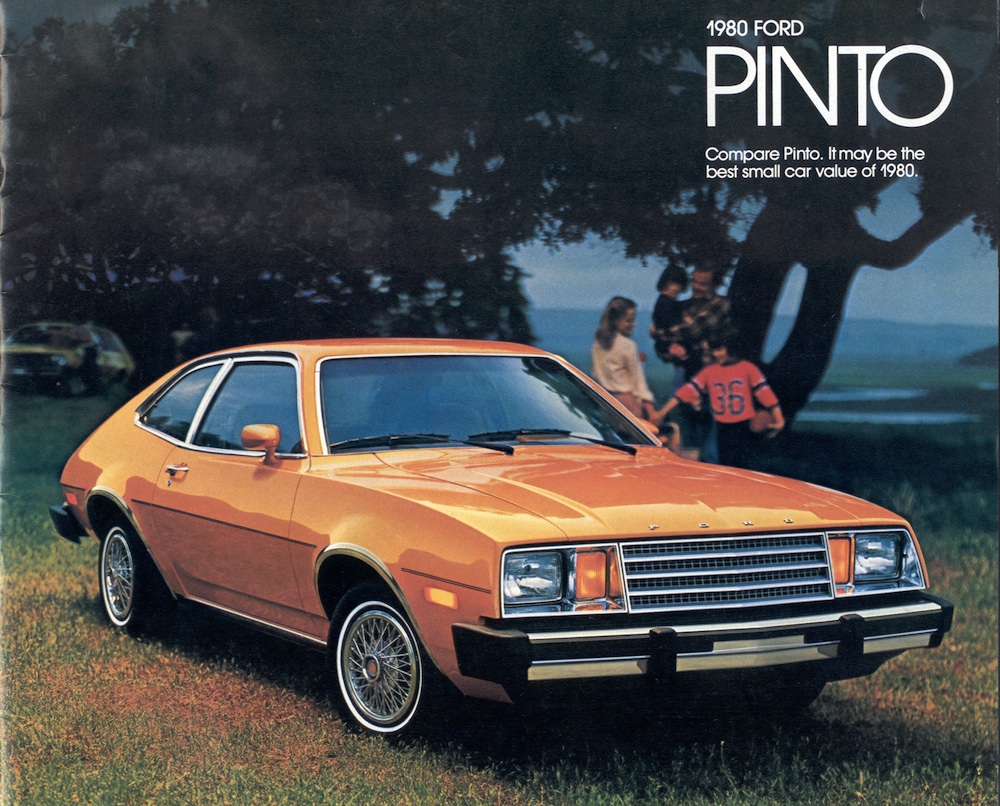
Ford Pinto (1971–1980)
Lesson: Don’t design a car that explodes
In order to cut costs on their new fuel crises-beating cheapie, the lads at Ford decided to put the fuel tank behind the rear bumper. As a result, even a low-speed rear impact would cause bolts protruding from both the bumper and diff to puncture the fuel tank… and whumpff. Oh. And the doors had an annoying tendency to jam. Cue multi-million dollar payouts. Conservative estimates put Pinto fireball deaths at 500.


Yugo GV (1984–1991)
Lesson: Don’t build cars if you’re Yugoslavian
The Yanks have a high tolerance for terrible cars. But not even they could put up with the Yugoslavian-built Yugo. It seemed like a good deal when launched in the US back in ’84 – low price and a 10 year/250 000km warranty – but it’s build quality was terminally bad… not that much of a surprise when “carpets” were listed as a special feature. Interestingly, production ended when the Yugo’s Zastava factory was bombed by NATO in ’91. America is part of NATO isn’t it? Just saying.


Chrysler/Desoto Airflow (1934)
Lesson: “Ahead of its time” is not a good thing
Make no mistake, this was a good car. A great one, even. Boasting a light-weight, steel-spaceframe construction and near 50-50 front-rear weight distribution, it should’ve been celebrated. But no. Unfortunately its ground-breaking, streamlined body looked a little too utilitarian for American tastes… “Hell! *spit* Looks it’s been designed by one of them damn Bolsheviks.” No-one bought it.


Dodge Custom Royal (1955)
Lesson: Vinyl seats work in car. Vinyl records don’t.
You can see what they were thinking. After all, everyone listens to their iPods in the car these days. Unfortunately playing the musical tech of the time – records – in an automobile proved a little more problematic. Potholes and turntable needles do not make for good bedfellows. Chrysler even developed custom-made LPs that were the size of a 45rpm single, but played at 16 2/3 rpm. It was an expensive flop.


Crosley Hotshot (1949)
Lesson: Don’t call your car a “Hotshot” unless it actually is.
It might work these days with a sophisticated motorbike engine, but no post-war car weighing 500kg and boasting a 750cc engine was going to produce anything resembling “hot” in the performance stakes. What was hot however, was its dual-overhead cam engine brazed together by pieces of, not iron, but tin. When the welds let go – which they frequently did – things did indeed quickly get very “hot”. 


As appeared in the Oct 2012 issue of the Kulula in-flight magazine

Tuesday, October 16, 2012


The Morris Dancers of China
On test... MG6 1.8T Luxury

The Opium Wars... not Britain’s proudest moment. In a nutshell: during the mid-1800s, the Brits were making a fortune flogging opium to the Chinese. When the Chinese emperor objected to both the amount of coin leaving his land and a growing number of addicted subjects, Her Majesty dispatched an expeditionary force to remind this impudent regent of his place. Which they summarily did. Not only did the British navy once again open up the opium trade, but they claimed Hong Kong for Queen and country too.


It’s not surprising then, that revenge figured prominently in Chinese thinking. What is surprising though, is the manner in which they took it. Instead of send their hordes to invade that small, damp island in the North sea… they bought the MG brand.

It was a cunning move. What better way to teach those foreign devils a lesson than reach out halfway across the world and pluck out the very heart of British heritage. Until then, Morris Garages had been one of Britain’s most venerable automotive brands. For the best part of 80 years, MG had produced cute little convertibles that smelled gloriously of leather, wood and hot oil. Unfortunately, and most inconveniently, though in 2005 the MG Rover Group went bang.

Sensing its opportunity had finally come, China, in the guise of Nanjing Automobile, snapped up the rights to the MG badge and went about serving that dish best served cold. Which brings us to the MG6…

Thing is, the MG 6 is not a bad car. Sure, the styling might be a something between a new Hyundai and previous gen. Renault, but both the fastback and the sedan are nonetheless handsome automobiles. Performance is reasonable too, although one would expect a little more go from its 118kW 1.8-litre turbo (the car’s two ton heft is a bit of an issue). And while it’s not totally at ease changing direction in sharp cornering, the handling is assured and planted through fast, sweeping corners.


It offers decent value for money too – at R239 000, the MG6 fastback Luxury we tested is in the same price bracket as a top-spec Hyundai Elantra, a mid-spec Toyota Corolla or a low-spec Ford Focus and VW Jetta. Up against these, the MG offers both a bigger engine and considerably more space. You could fit an old MG Midget in its cavernous boot.

So it’s not bad…And that’s the nature of the Chinese revenge.

The MG is simply “not bad”. Unlike its ancestors, this car is not quirky, interesting or even charmingly awful… which many old MGs were. This is simply “not bad”. They’ve given back the British an adequate, but bland version of a brand they had once loved.

It has the right badge, but it’s not all there. Like it’s been smoking opium…

Prices for the MG6 Fastback and Sedan range from R229 900 to R269 900

**as appeared in the Oct 2012 issue of the Kulula in-flight mag

Monday, October 15, 2012

Top Five Early Flying Cars

These would be the ancestors of the new Terrafugia Transition flying car that’s grabbing headlines around the world.

1917 Curtiss Autoplane.
Fourteen years after the Wright brothers managed their historic flight, fellow American aircraft pioneer Glen Curtiss came up with the first-ever car that could fly. Sort of. With its wings removed, this aluminum-bodied hybrid could do 70km/h on the road, but unfortunately actual flight was a problem… a few short hops was all it could manage.


1937 Waterman Aerobile
This one actually flew. The high-wing monoplane on three wheels was powered by a 100bhp Studebaker engine could haul itself off the ground and buzz around thanks to a propeller attached to the rear of the vehicle. Understandably, there weren’t too many people willing to risk their lives in this contraption and a distinct lack of customers killed it off.


1946 Fulton Airphibian
Robert Fulton started from the other end. Instead of a car the flies, he designed an airplane that also drove. Apparently, once you’d landed, it only took five minutes to unscrew the prop and undo the tail before driving off at 80km/h. Significantly, this was the first-ever flying car to be certified by the USA’s Federal Aviation Authority.


1949 Taylor Aerocar
Flying cars enjoyed something of a golden age during the optimistic post-war years, but none enjoyed any commercial success. Except this one built by Moulton Taylor. After getting its FAA certification in 1956, Moulton built and sold six of these flying planes, with one still in the regularly flying as late as 2006. A man in Minneapolis, USA, is currently selling his 1954 Aerocar for R10.2-million if you’re interested.


1973 AVE Mizar
After a decade in the doldrums, the idea of a flying car again entered public consciousness with this effort. A true hybrid, mating the rear section of a Cessna Skymaster to a Ford Pinto, the Mizar (named after a star) showed some promise. Tragically, the prototype’s build quality wasn’t quite up to aviation standards and a failed wing strut caused a fiery crash that killed its creator Henry Smolinski.


As appeared in the Sept 2012 issue of the Kulula inflight mag.

Tuesday, September 11, 2012

Steve Davis, is that you?

On test... Honda Civic Hatch  1.8i-VTEC Elegance

Steve Davis. You may have heard of him. But probably not. The man from London is one of the all-time snooker greats. He’s won six world championships, was the world’s no. 1 for seven years, and has won 28 pro titles in a career that, at age 54, still continues. Stellar achievements by any standards.

So why haven’t you heard of him? Sure, snooker isn’t that big here in SA, but still, those achievements should have made him noteworthy enough to blip your radar, right? The problem with Steve… was Steve. He’s not what you’d call a compelling character. The words “flamboyant”, “exciting” and “charismatic” have, to date, never been used in the same sentence as “Steve Davis”. In fact, so dour is Steve’s demeanour that he’s actually known by the ironic nickname of “Interesting”… Steve “Interesting” Davis.

Which brings us to the Honda Civic. It has a similar reputation. The hatchback, with its futuristic styling, has tried hard to shuck the “sensible shoes of cars” reputation its sedan sibling has garnered. Somewhat unsuccessfully it must be said. You see, the hatch is like Steve Davis with a floral shirt and extra hair product.. he looks funkier, but you still know that underneath it all, it’s still Steve.


 And that’s a good thing. Because that means the Civic is a car you want to own. No really. It’s an automobile without any discernible weakness. It will sink the black ball every time. It’s the epitome of Get The Job Done. Let’s pot a few balls and tick a few boxes shall we…

Build quality. Hey. It’s a Honda and that means its bullet proof.

Engine. We tested the 1.8-litre petrol car (also available as a 2.2-litre diesel). It’s an upgraded four-cylinder i-VTEC engine good for 104 kW of power at 6500 rpm and 174 Nm of torque at 4300 rpm. Not the most powerful engine. But powerful enough.

Tech, It features Honda’s ECO Assist illuminated dashboard system to tell you how fuel efficient your driving is. It glows green for good, bad blue for bad. There’s also a green dash-mounted Econ switch which, when pushed, will activate the best throttle response and air-conditioning settings to save fuel.


Interior. It has the previous gen’s fighter pilot cockpit feel, but looks a step up in quality with soft-touch materials and leather in the exec model. It’s also learned a trick from its Jazz stablemate… a “magic seat” rear set up that offers near miraculous cargo space when configured.

Handling. We’ve saved the best for last … the new Civic manages a remarkable feat. Through the corners it manages to be both lithe and supple, without any discernible body roll. It’s sure-footed and precise sans the usual bone-shuddering suspension stiffness this requires.


It’s an Impressive car this. Exciting? No, but if you’re looking for a go-to vehicle that’s ultra-reliable, efficient, and immaculately screwed together, this is the one. It’s a bit like Steve Davis’ legendary perfect break back in 1982 – the first televised broadcast of someone consecutively potting every single ball (all 15 reds with 15 blacks, followed by all six colours) for a total of 147 points.It was helluva interesting to watch.

The Honda Civic Hatch range starts at R248 000

**review as appeared in the Sept issue of Khuluma, the Kulula in-flight magazine.

Tuesday, September 4, 2012

Top Five Six-Wheelers

Why have four-wheels when you can have six...


Pullman Six-wheeler ... 1906
The granddaddy of all the sixers, this experimental car also sported the most unusual layout. Pullman was a US maker of luxury cars between 1905 and 1917. They were moderately successful, though this car was a total disaster. And for obvious reasons too. Those evenly spaced axels meant it had the turning circle of a barge. The car crashed into pole within a year of its construction and was mercifully scrapped.


C6W ... 2004
Designed by Italian company, Corvini engineering, this rear-wheel drive prototype boasts some impressive bits – a 4.2-litre Audi V8 engine, a top speed of 295km/h, loads of carbonfibre and, of course, six wheels. Its rear-wheel drive with those front wheels designed to reduce drag and “increase air penetration”. The C6W was introduced at the 2004 Geneva Motor Show and has been “set for commercial production” ever since. Right.


Panther 6 ... 1976-77
This one actually made it into production. Yes. They made two. The Panther 6 however does deserve some credit… it was actually a pretty decent automobile. Its British manufacturers claimed it could crack the 200mph barrier (320km/h) and given its 600bhp twin-turbo 8.0-litre V8, that was entirely possible. Incidentally, the car also came with such futuristic gizmos as a phone and a TV. All as standard.


Citroën Cruise Crossser ... 2007
Swiss car designer Franco Sbarro thinks so far out the box that he and the box are pretty much in different postal codes. Which is why Citroen asked him to whip up a little something special based on their production C-Crosser SUV. What he came up with is a six-wheeled hybrid with a conventional diesel engine supplemented by an electric motor. Yes. Not Frankie’s finest hour.


Trekol 39294 ... 2012
Also known as the Amazing Floating Car, this Russian-made monster is, in fact, genuinely amazeballs. When they say it can go anywhere, they mean anywhere… even water. Thanks to its huge tubeless tyres and lightweight polystyrene-sandwiched-by-fibreglass body, this 6x6 is not only road legal, capable of withstanding temperatures from -60 to +60, but it has the ability to traverse water at a stately 10km/h.


.

Tuesday, August 28, 2012

This car is incredible. They swear.


On Test… BMW 320d
  

They’re swearing in Germany. And not just at the Greeks either. In fact, the blame for this increase in expletives among its usually teutonically restrained citizens can be laid a lot closer to home. Two southern German cities, to be precise... Ingolstadt and Stuttgart. It’s here, echoing down to the surgically pristine assembly lines of Audi and Mercedes-Benz, that a slew of particularly colourful profanities have exploded from the frosted glass and aluminium boardrooms above.


The reason? The new BMW 3 Series… it’s a game changer. What was looking like a fairly even race among the A4, C-Class and the 3 Series – with personal preference being the only real differentiator – has turned into a no-brainer. The new 3 Series is simply that good. Of course it’s the whole package that makes a car, but one aspect of the new Beemer can proudly claim to be the reason for all that uncouth language.

The chassis...

It’s not often one gets into a car occupying a lofty niche like the “the small premium sedan segment and immediately notices how different it feels to its competitors. But one really does with this. The balance, the precise turn-in, the predictability, and the poise around corners are all hugely impressive. And a large part of the secret is the Driving Experience Switch Control button nestled next to the gear lever. This electronic wizardry allows one to switch between Comfort. Sport, Sport + and Eco Pro mode with the difference being changes to the car’s suspension settings (if fitted with the optional adjustable system), throttle response and gear-shift patterns


The car on test – the 320d – is probably the sweetspot of the whole range segment. In terms of performance delivered vs fuel efficiency vs price paid, this turbo charged 1997cc diesel is the equivalent of that immensely satisfying , vibrationless thunk you feel when you and your 3-iron absolutely middle down the fairway. Its 135kw output might not blow you away, but the 380Nm of torque means plenty of power through most of the rev range, which is really what one needs in daily driving conditions.

It’s hard to argue against this new Beemer. Perhaps those headlights with what look like overtly long tearducts aren’t to everyone’s taste, but there is none-the-less an overall balance to the car’s exterior design. Inside of course, it’s as well screwed together as it gets. But that’s all incidental when compared what this car can do on the road. One always feels plugged into a BMW – driving dynamics is the impeachable brand promise – but never quite like this…


The BMW 3 series base prices range from R363 052 (320i) to R547 190 (335i). 
The 320d starts at R390 500


(Review published in the July issue of Khuluma, the Kulula in-flight magazine)